The short answer
AI can reduce the effort needed for parts of implementation, but the cost of a complete software project also includes discovery, architecture, verification, integrations and operation. Compare the cost of an accepted, supportable outcome rather than the price of generating code.
Separate AI-assisted delivery from building an AI product
A supplier can use AI to build ordinary business software. That is AI-assisted delivery. A product that uses a language model to interpret documents or act on customer requests is a different cost question, with additional evaluation and operating requirements. A quote needs to make that distinction clear.
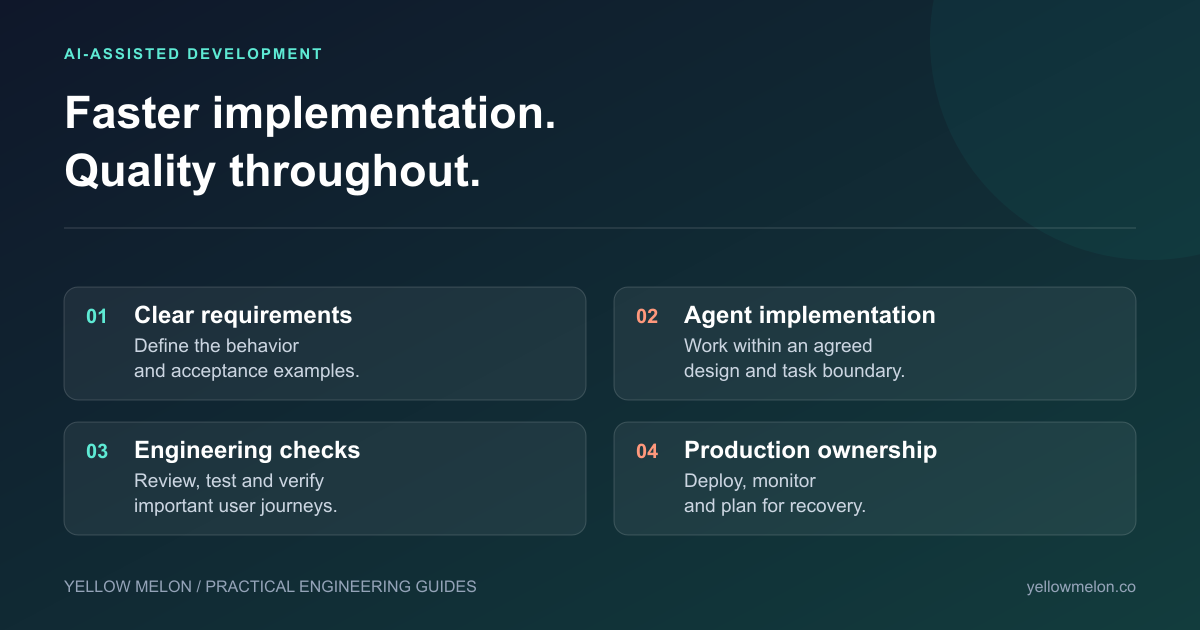
For AI-assisted delivery, a tool subscription is only one input. The useful question is whether the approach reduces the total effort to reach agreed acceptance criteria. If implementation is quicker but review and rework expand, the net saving may be smaller than the coding demonstration suggests.
The cost drivers that remain
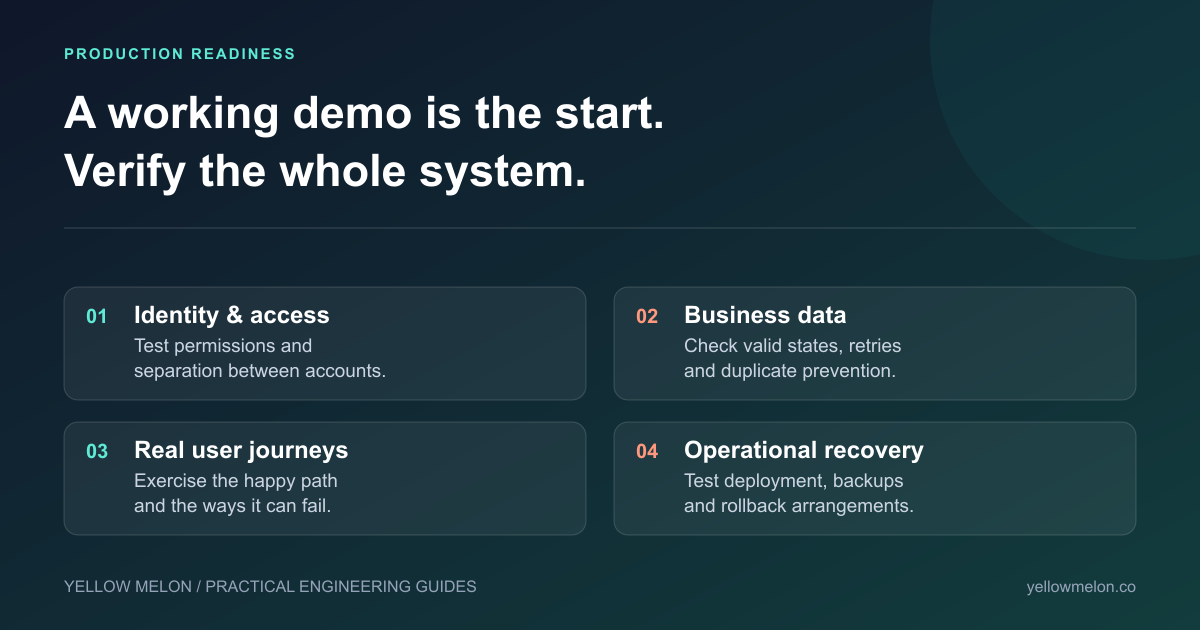
The biggest uncertainties often sit outside repetitive implementation: undocumented business rules, data migration, integrations, permissions and production requirements. AI can help investigate and implement these, but someone must resolve ambiguity and verify the decisions.
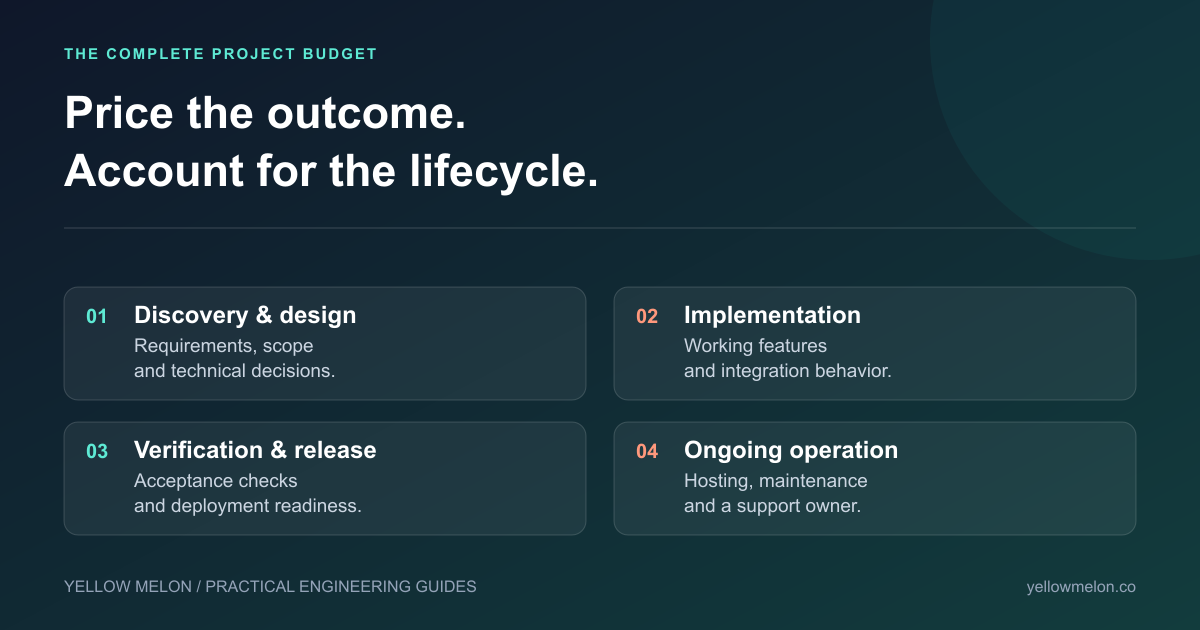
Ask for an estimate split into meaningful areas. That makes it easier to see which tasks can benefit from acceleration and where the project needs further discovery. DORA’s research on AI-assisted development reinforces the importance of the wider delivery system when assessing value.
| Budget area | What you should receive |
|---|---|
| Discovery and design | Agreed scope, requirements and key technical decisions |
| Implementation | Working features and integration behavior |
| Verification and release | Acceptance checks, deployment and recovery arrangements |
| Operation | Hosting, monitoring, maintenance and a support owner |
An illustrative calculation, not a price promise
Suppose a hypothetical project estimate contains 40 hours of discovery and design, 100 hours of implementation, and 60 hours of testing and release work: 200 hours in total. If AI saves 30 implementation hours and adds 10 hours of review, the revised total is 180 hours. That is a 10% overall reduction, even though implementation effort fell by 30%.
These figures are an explanation of the arithmetic, not Yellow Melon rates, a benchmark or a quote. Actual savings can be larger, smaller or absent. A change in scope, poor requirements or significant rework can consume the saving. This is why a percentage attached only to coding time should not be applied to the entire project price.
How to compare development quotes fairly
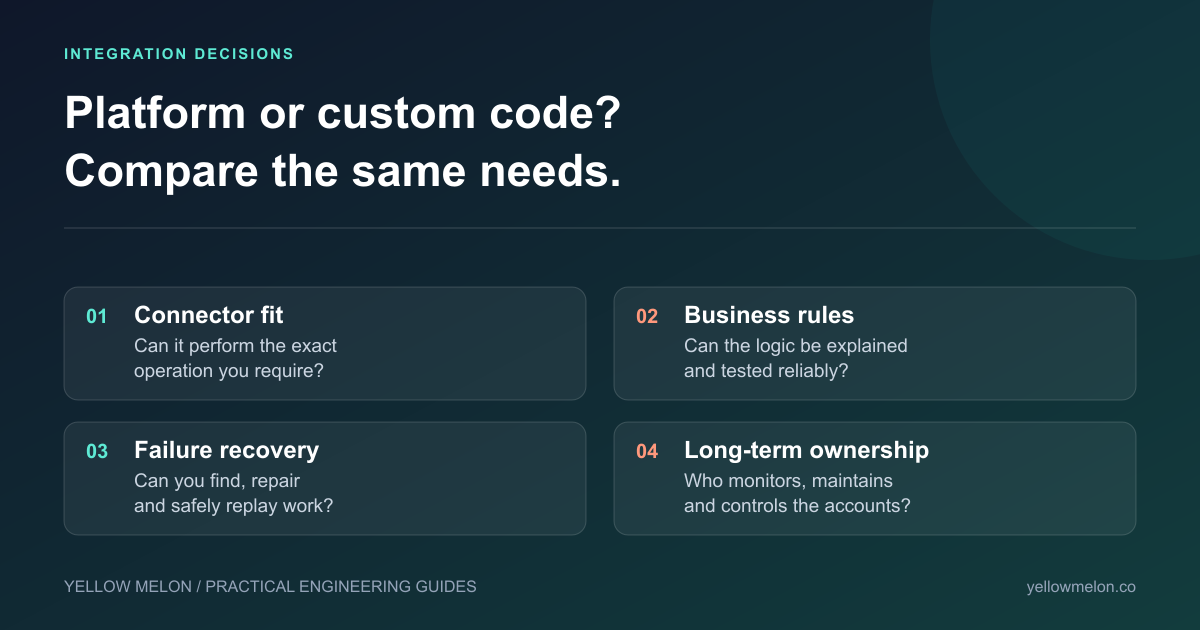
Give suppliers the same problem statement and ask what they include. A cheaper quote for a prototype is not comparable with a production build that includes migration, monitoring and support.
- What is included in the scope, and what triggers a change in price?
- Which business examples define acceptance, and who signs off?
- Are integration failures, access controls and browser journeys tested?
- Who owns the code, accounts, infrastructure and documentation?
- What happens after launch, and what maintenance is excluded?
Reduce uncertainty with a smaller first commitment
When the riskiest assumption is unknown, a short discovery or prototype engagement can establish whether the larger project makes sense. Define the decision it should enable: validate an integration, prove a user journey or establish a workable data model. Avoid paying to polish features before resolving the main uncertainty.
For a business workflow, establish a baseline for staff time, errors and exception handling before estimating a return. Those measurements help you decide whether the proposed system is worthwhile and give you something concrete to evaluate after delivery.
Sources & further reading

About James Drummond
Founder of Yellow Melon and senior full-stack developer. James built and sold Smoothbook and has worked on systems for Universal Music Group, AllSaints and financial-services businesses.
Professional background →