The short answer
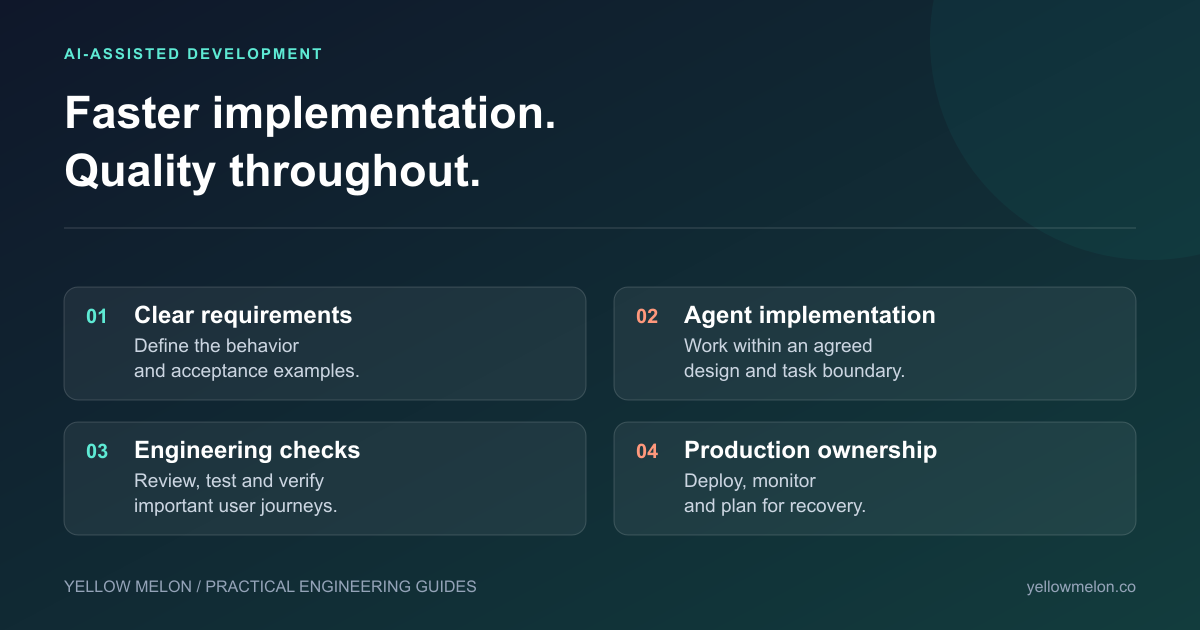
AI-assisted software development can shorten implementation and feedback cycles. Its value depends on clear requirements, sound architecture and verification of the result. Buying faster code generation alone does not buy a reliable business system.
What is AI-assisted software development?
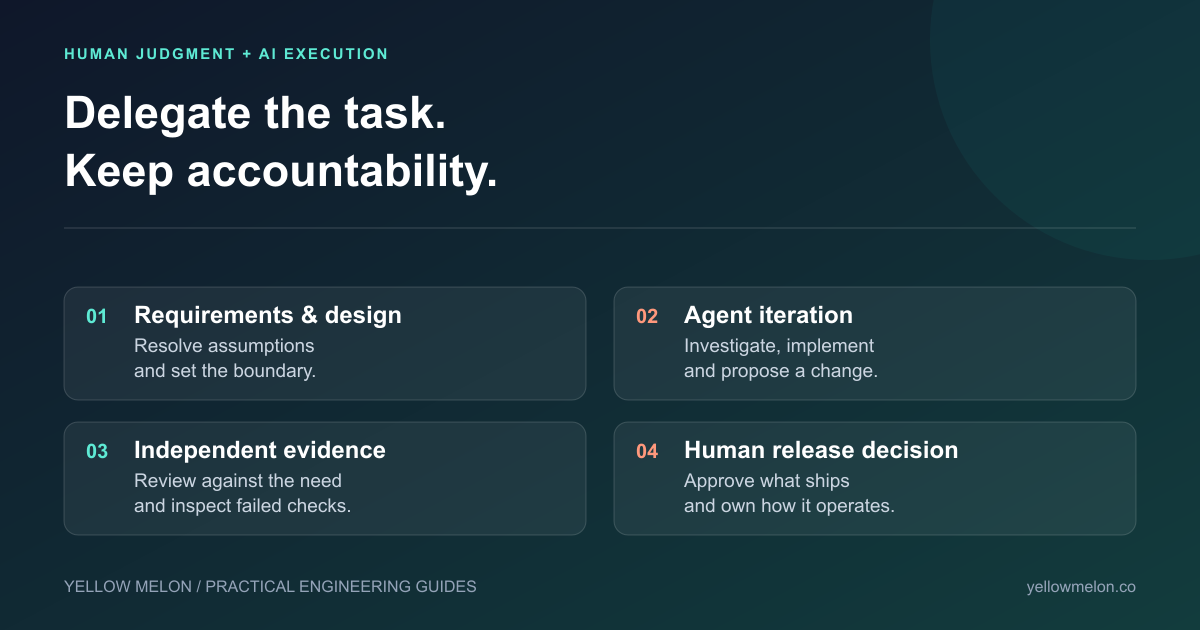
An experienced developer uses AI tools to help investigate a codebase, propose changes, implement features, write tests and review work. Coding agents can carry out several of those steps in sequence. The developer still defines the problem, sets boundaries and takes responsibility for the result.
This is different from building an AI product. A booking system can be developed with coding agents without containing any AI features. Conversely, a product with an AI assistant needs additional work on model behavior, evaluations, permissions and running costs. Ask which of these a supplier means when quoting ‘AI development’.
Where AI can save development time
AI is useful when the task is well bounded and the result can be checked. Repeated interface patterns, API scaffolding, test fixtures and documentation drafts are sensible candidates. It can also shorten the path from a question about an unfamiliar codebase to a change worth reviewing.
For a buyer, the useful outcome is a shorter feedback loop: see working software, discover a misunderstanding, and correct it before more work depends on it. Measure completed, accepted features and escaped defects alongside coding time. A large number of generated lines says little about whether the project is moving forward.
| Potential benefit | Condition for getting it |
|---|---|
| Faster implementation | Small tasks with clear acceptance criteria |
| Earlier feedback | Working demonstrations and realistic test data |
| Broader test coverage | Independent review of what the tests actually prove |
| Easier maintenance | A consistent design and reviewed changes |
The limitations buyers need to understand
An agent can produce plausible code while misunderstanding a business rule. It may pass tests that repeat the same misunderstanding. It may also solve a local problem in a way that conflicts with the wider architecture. Missing context does not become harmless because implementation is quick.
Permissions, financial calculations, customer data and failure recovery need deliberate design. DORA’s 2025 research describes AI as amplifying existing organizational strengths and weaknesses. The practical implication is to improve the delivery system around the tools, rather than expect the tools to repair it automatically.
Productivity also varies by task and codebase. Treat a universal promise of a particular speed multiplier as a claim requiring evidence. Ask what was measured, what quality checks were included and whether the comparison covered deployment and rework.
What quality controls should you expect?
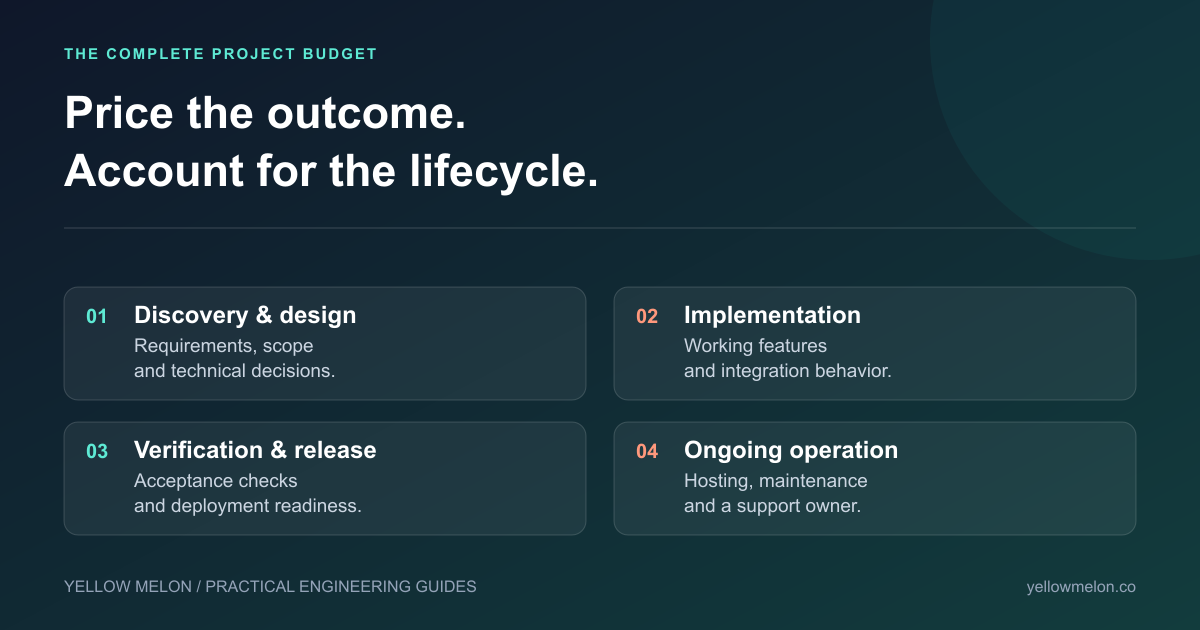
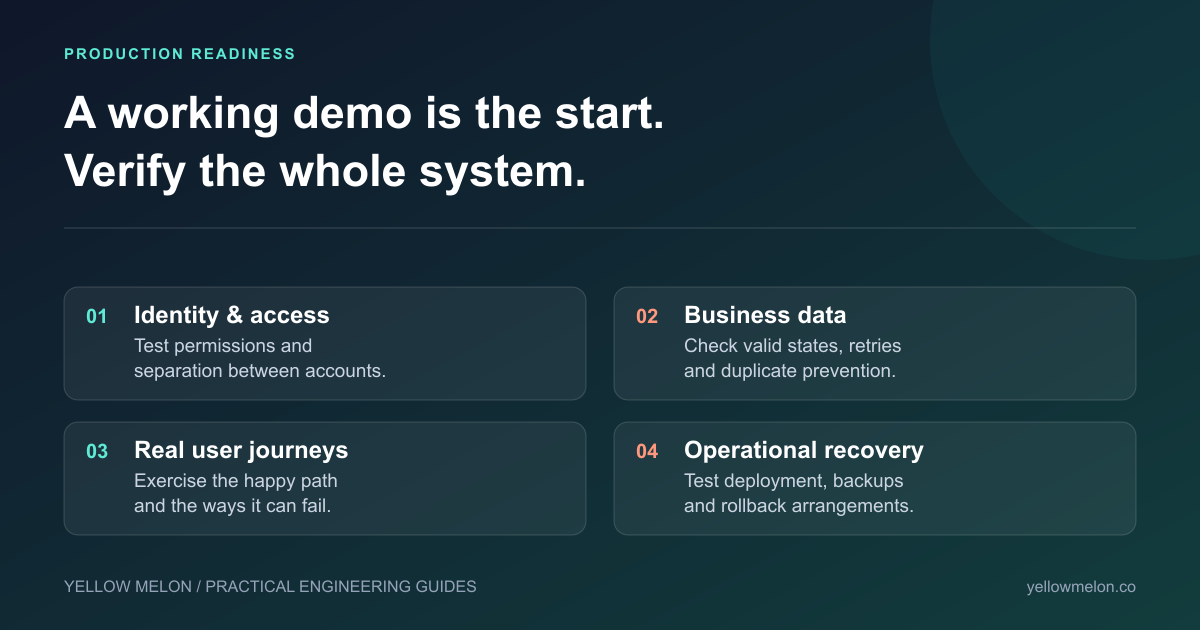
The checks should reflect the consequences of failure. A prototype used by its founder has different release requirements from a multi-tenant system handling customer records. Agree those requirements before development begins.
- Written acceptance examples covering normal behavior, edge cases and prohibited actions.
- Engineering review of architecture, access control and dependency changes.
- Automated checks plus browser tests of important user journeys.
- A named person approving consequential changes and production releases.
- Monitoring, backups and a practical recovery plan after deployment.
Questions to ask before hiring an AI-assisted developer
Ask a prospective supplier to walk through a completed change: the requirement, architectural decision, implementation, checks and release. Ask what the agent got wrong and how the process caught it. That discussion is more informative than a demonstration in which everything works first time.
Clarify who owns the repository, infrastructure, credentials and ongoing maintenance. Establish what happens when a tool changes or a deployed feature fails. AI can accelerate the work, but you are still buying engineering judgment and responsibility for a functioning system.
Sources & further reading

About James Drummond
Founder of Yellow Melon and senior full-stack developer. James built and sold Smoothbook and has worked on systems for Universal Music Group, AllSaints and financial-services businesses.
Professional background →